A small workshop in Fremantle
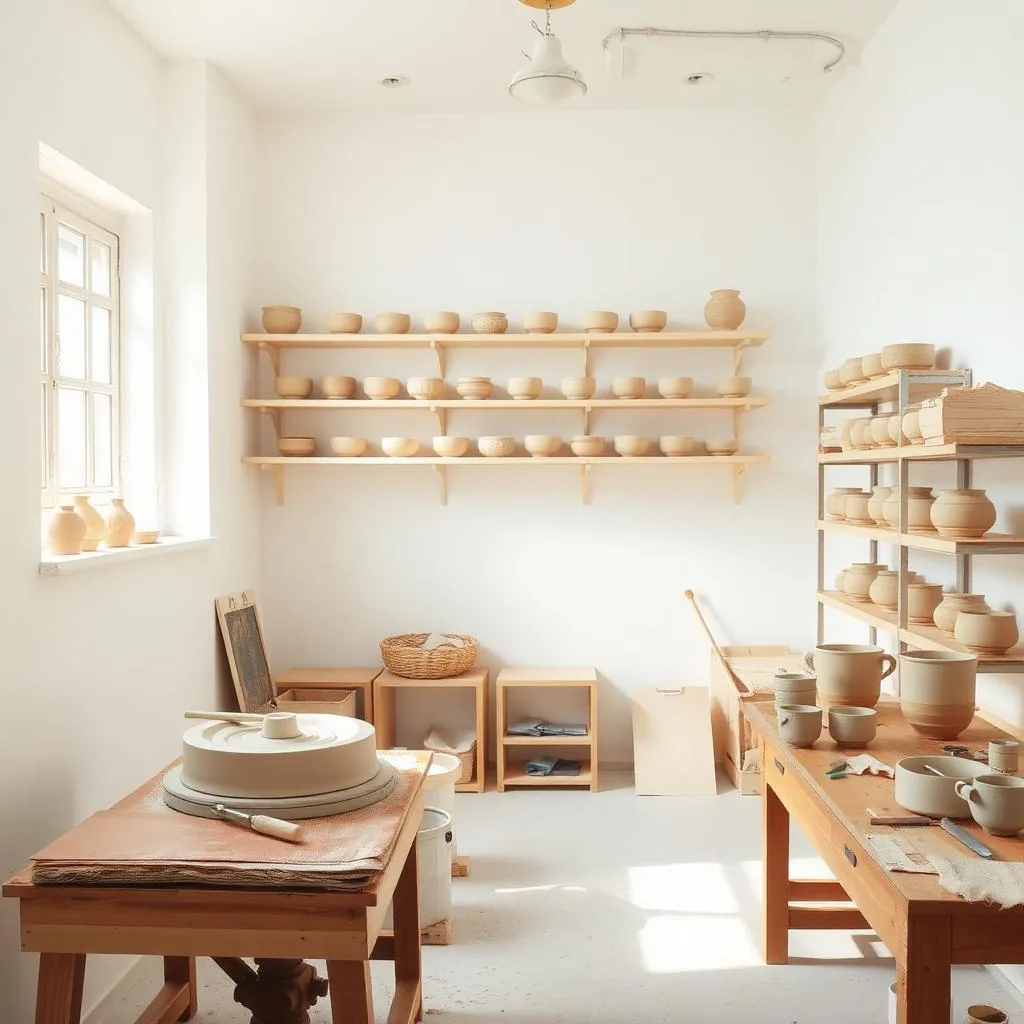
Kelp & Copper makes ceramic and copper homewares in one room off a laneway in Fremantle, Western Australia. White walls, clay dust on everything, and enough north light that most of the day you can work without turning a lamp on.
Etta Brandis
Etta started the workshop in 2018 after a decade of making pots in other people's studios and a short, useful detour into metalwork that she meant to be a hobby. The first thing she sold was a mug with a handle wide enough for four fingers, redrawn about fifteen times before it felt right. It's still the piece we make most.
She makes almost everything herself, with one part-time hand on glazing and packing days. That's the reason runs are small, why the vases only come around twice a year, and why a glaze colour occasionally goes out of stock for a month. It's also why the pieces look like they were made by a person, which is the point.
What we hold to
- Made here, not badged here. Every piece in the shop is thrown or raised in the Fremantle workshop.
- Variation is the material, not a defect. Speckle, glaze break and hammer marks differ piece to piece.
- Honest description. Dimensions are measured, not estimated, and the care notes say what will actually damage a piece.
- Repair before replace. Send a chipped copper piece back and we'll usually be able to planish it out.
How a piece is made
Throwing and raising
Ceramics start as a speckled stoneware body wedged on the bench by the door. Etta throws in batches of twenty or so, because a glaze bucket mixed once behaves the same across a batch and drifts if you spread it over months. Copper starts flat: a disc of sheet, hammered down over a stake until the walls stand up. A kettle body takes the better part of a day.
Drying, trimming, planishing
Pots dry on plywood shelves for a few days, then go back on the wheel to have the foot trimmed and the base ring left raw. That raw ring is deliberate — it shows the clay the piece is actually made of. Copper gets planished with a smooth-faced hammer, which is what leaves the faceted surface rather than a texture applied afterwards.
Glazing and firing
Glazes are dipped or poured by hand, so they pool thicker where they run off and break back to bare clay along a sharp rim. Everything is fired twice, to 1240°C on the second firing, in a kiln that holds about a fortnight of work. Some pieces come out of the kiln and go straight into the seconds box.
Packing
Orders are packed on the same bench the pots are thrown on, in recycled paper wadding, with the copper wrapped separately so it doesn't mark the glaze. Most orders leave Fremantle within one to two business days.
Visit, or ask us something
The workshop is open Thursday to Saturday, 10am – 4pm, at 12 Example Street, Fremantle WA 6160. Call (08) 9123 4567 or email hello@example.com.au with any enquiry. These are placeholder contact details for a demonstration site — please don't try to use them.
See what's in stock